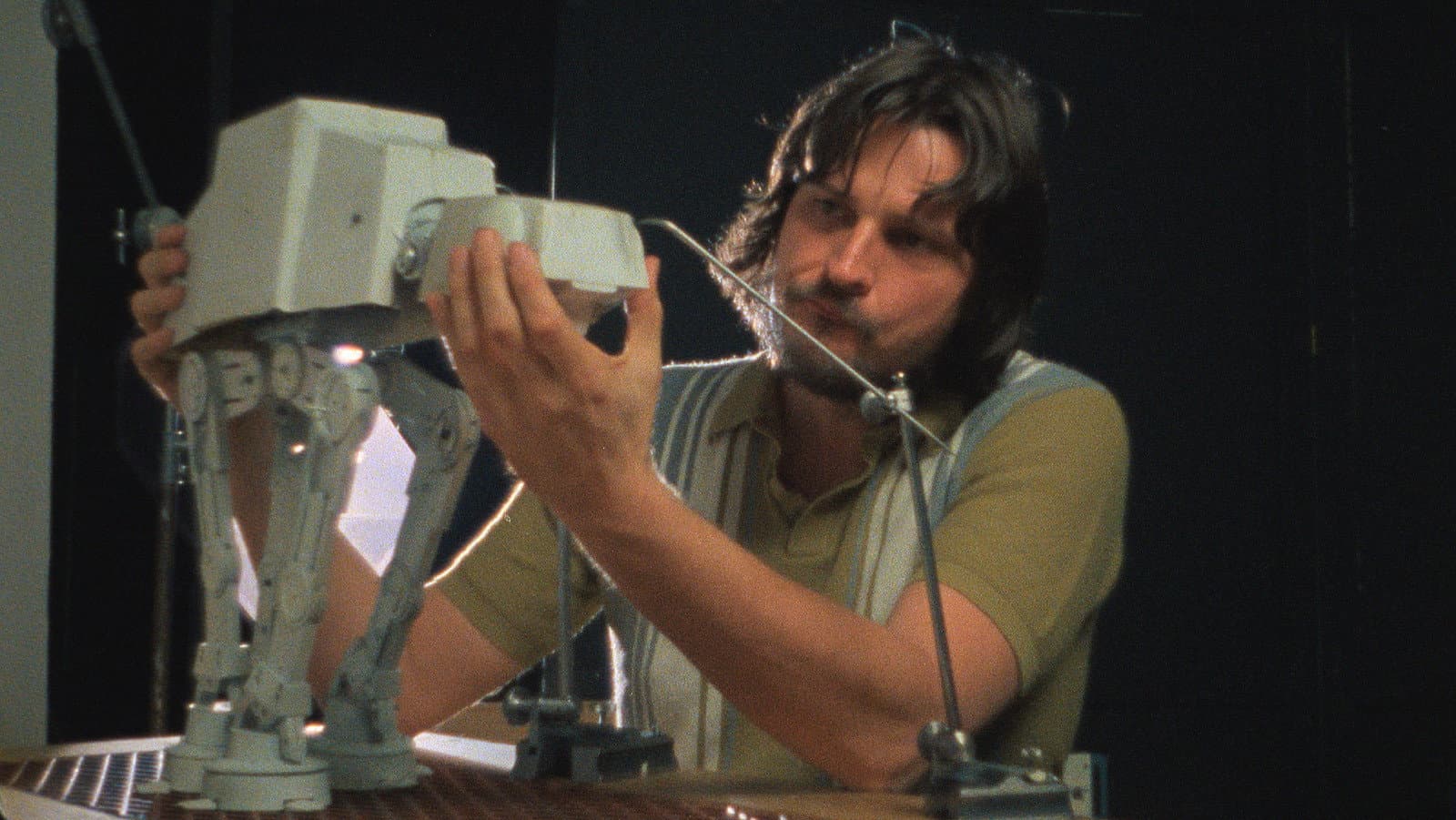
Industrial Light & Magic - the visual effects house born from a garage in the 1970s that gave us the space battles of a galaxy far, far away - remains the undisputed heavyweight of cinematic illusion. But for all its legendary status, the full story of how a scrappy band of model-makers and optical printers upended Hollywood has rarely been told as its own saga. That changes now, with the arrival of The Story of Industrial Light & Magic - the Company That Changed Visual Effects Forever, a comprehensive new documentary feature that pulls back the curtain on five decades of breakthroughs, near-catastrophes, and the relentless pursuit of the impossible.
The project serves as both a love letter to the craft and a sobering history lesson on how the film industry’s technical backbone evolved. Rather than simply celebrating the company’s greatest hits - the TIE fighters, the morphing T-1000, the photorealistic dinosaurs - the documentary spends considerable time on the painful, often tedious work that made those moments possible. Viewers will see the sweat-stained workshop floors, the late-night coding sessions, and the analog-era ingenuity that preceded the digital revolution, offering a rare glimpse of an art form that usually hides behind finished shots.
At the heart of the narrative is a simple but profound question: how did a special-effects unit created to finish one space opera morph into an institution that essentially wrote the grammar of modern blockbuster filmmaking? The early chapters zero in on the chaotic production of Star Wars, when the founder of the company, George Lucas, assembled a ragtag team of young artists who were given near-total freedom to invent tools on the fly. That entrepreneurial spirit, the documentary argues, became ILM’s true legacy - not the awards or the box office receipts, but a culture of problem-solving that attracted the brightest minds in engineering and art.
The story unfolds in clear phases, reflecting the industry’s larger technological shifts. First, the practical era, when miniature spaceships were shot against bluescreens with motion-controlled cameras, a technique pioneered at ILM and later copied worldwide. Then came the computer graphics upheaval of the early 1990s, a period that nearly split the company apart as traditional craftsmen fought alongside young programmers for the soul of the effects process. The documentary presents this not as a clean victory for digital, but as a messy negotiation where the best ideas - whether painted by hand or rendered in code - eventually won.
Interviews with key figures, including longtime VFX supervisors, lead animators, and studio executives, pepper the feature with candid, often funny anecdotes. One sequence describes the near-disaster of a water tank built for a pirate film that threatened to flood an entire soundstage; another recounts how a software engineer solved a rendering problem by writing code on a napkin during a lunch break. These moments ground the larger narrative in the human quirks that drove technological evolution. The documentary doesn’t shy away from the darker side either, addressing the grueling production schedules and the creeping corporate consolidation that followed ILM’s acquisition by Lucasfilm - and later, its integration into Disney’s vast machinery.
What may surprise audiences most is the documentary’s insistence that ILM’s most important contributions were not visual at all. Rather, it was the company’s willingness to share its proprietary software and techniques with rivals, fostering an ecosystem where everyone’s tools improved for the greater good. That ethos helped standardize visual effects pipelines across the industry and enabled the rise of competitors who now challenge ILM’s dominance on every major tentpole release.
The timing of this retrospective feels deliberate. As studios cut back on practical effects in favor of LED volumes and real-time render engines, the ILM story serves as a reminder that the most enduring special effects have always been the ones that serve the story, not the other way around. The documentary’s final act looks toward the future, featuring discussions with a new generation of artists who are exploring artificial intelligence and virtual production, while veterans warn that technical wizardry without emotional grounding will always ring hollow.
Critics who have seen the work applaud its pacing and its refusal to become a corporate puff piece. The documentary earns its sweeping title by tracing a direct line from the hand-painted matte paintings of the 1970s to the neural networks that now generate entire alien landscapes. It’s a journey marked by both spectacular success and humbling failure - early experiments with computer animation produced footage that the filmmakers themselves now call embarrassing - but the through-line remains one of relentless curiosity.
The Story of Industrial Light & Magic isn’t just for industry insiders or Star Wars superfans. It’s for anyone who has ever paused a movie to wonder, “How did they do that?” The answer, it turns out, involves equal parts genius, stubbornness, collaboration, and pure luck. And while the company’s roster of credits includes some of the highest-grossing films in history, this documentary argues that its true achievement lies not in the spectacle on screen, but in the community of craftspeople who never stopped believing that a brand-new problem was simply an opportunity waiting for a clever solution. For fans of cinema as a visual medium, the lesson is clear: every time you watch a dragon soar or a city crumble, you’re seeing the lasting shadow of that original garage workshop - and the magic it made.
Source: D23