The opening image of Her Private Hell is almost too clean to be truly frightening: a gleaming metropolis rendered in perfect, sterile light, its towers aspiring toward a future that feels both inevitable and empty. Then the mist rolls in, and Nicolas Winding Refn, cinema’s great poet of controlled violence, proceeds to smear that cleanliness with something ancient and ravenous. It is a bold, confounding, and frequently maddening picture - one that arrived on July 23 to a chorus of shrugs from critics and a cold, hard thud from audiences, landing a 5.1 on TMDb and a 4.5 on IMDb. Those figures sting, but they also tell a story of their own: this is not a film that wants to be loved. It wants to be survived.
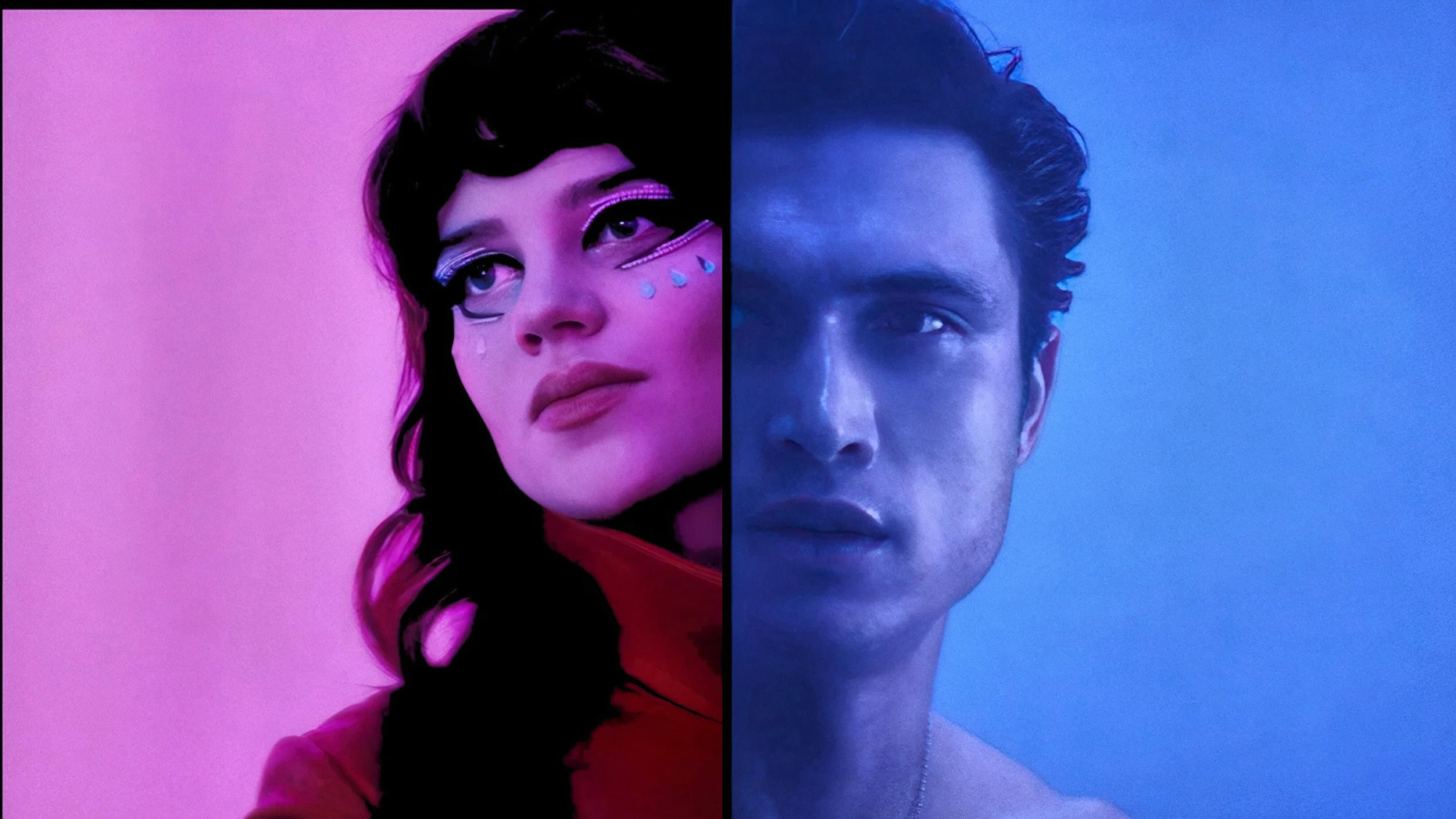
The premise sounds like a fever dream pitched at a studio retreat. A mysterious mist engulfs a futuristic city, unleashing an entity that is never quite named and never fully shown. In the middle of this apocalyptic haze, a troubled young woman named Elle, played with a taut, wounded intensity by Sophie Thatcher, becomes fixated on a single goal: find her missing father. Her path collides with Private K, an American GI played by Charles Melton, who has his own desperate mission - a harrowing odyssey to rescue his daughter from a place the film simply calls Hell. Two strangers, two fathers, one infernal fog.
But to describe the plot is to miss the point entirely. Refn has never been interested in narrative efficiency. He is a mood architect, a builder of dread. For 110 minutes, he stretches time into a rubber band, letting scenes breathe until they almost suffocate. The horror here is not the jump-scare variety, nor is it the slow-burn dread of a conventional thriller. It is something more existential: the horror of a search that may have no end, of a Hell that may be internal rather than territorial.
Thatcher anchors the chaos with a performance of quiet, brittle ferocity. Elle is not a typical final girl. She is withdrawn, skittish, carrying a grief that the film refuses to explain until the very last act. You watch her move through the misted streets like a creature unused to daylight, and Thatcher makes you feel every unspoken wound. Opposite her, Melton gives Private K a grounded, almost weary masculinity - a soldier who has seen too much to believe in clean exits. Their chemistry is not romantic in any conventional sense; it is a partnership born of mutual brokenness, two people who understand that the other’s quest is a mirror of their own.
The supporting cast circles them like satellites in a decaying orbit. Havana Rose Liu brings a feral unpredictability to Dominique, while Kristine Froseth’s Hunter is all icy calculation. Shioli Kutsuna and Aoi Yamada appear as the enigmatic Ms. T and Ms. S, figures who seem to run the bureaucracy of Hell itself, their interactions clipped and chilling. Dougray Scott, as the grizzled Johnny Thunders, and Diego Calva, as Nico, provide flashes of grim, world-weary color. No one is here to have a good time.
And that is precisely the film’s central problem. Her Private Hell is relentlessly, almost aggressively unpleasant. Refn’s palette runs to bruised purples and sickly greens, his sound design to low-frequency hums that vibrate in the teeth. The entity, when it does appear, is less a creature than a suggestion - a distortion in the frame, a ripple in the light. For a mainstream audience primed for monsters, this abstraction is a deal-breaker. For Refn devotees, it is the point.
There are sequences of staggering visual ambition. A descent into a subway tunnel lit only by the flares of Private K’s rifle feels like a descent into a nightmare you have had before. A confrontation in a mirrored corridor pays off in a single, devastating close-up that justifies the entire enterprise. But these moments are surrounded by stretches of ponderous silence, of characters staring into the middle distance while the score - sparse, liturgical - does the emotional heavy lifting. It is a film that demands patience it knows it does not deserve.
Perhaps the most useful way to frame Her Private Hell is as a dark fairy tale about the stories we tell ourselves to keep walking. Elle searches for her father because to stop searching would be to admit he is gone. Private K searches for his daughter because Hell, in his mind, is a place you can enter and exit if you have enough faith. The film asks a brutal question: What if Hell is not a destination but a condition? What if the mist is not the enemy, but merely the weather of our own despair?
It is no accident that the film for OTT Stories - available now for streaming - positions itself as a horror-thriller with science-fiction trimmings. The audience that finds it on a rainy Tuesday night, scrolling past the algorithm’s suggestions, may feel cheated by the lack of conventional scares. Others, the ones who let the fog wash over them without resistance, may find something else: a portrait of grief so unblinking it feels like a mirror. The low scores are not wrong. They are just incomplete.
By the time the credits roll, you are not sure what you just witnessed - a masterpiece, a failure, or something in between that refuses to be sorted. Refn leaves no easy answers, only images. And images, like Hell, tend to linger.