The premise is deceptively simple. Thirty-four days before Elizabeth Holmes is due to report to prison, she invites a skeptical film crew into her life, promising total access. Fielder, initially positioned as a bemused outsider, keeps the cameras rolling far beyond the original arrangement. What was meant to be an intimate portrait of an enigmatic felon becomes a three-year descent, with Holmes, her partner Billy Evans, their children, and a rotating cast of observers orbiting a woman who seems to be auditioning for her own redemption arc in real time. Amanda Seyfried appears as a kind of Holmes stand-in, a doubling device that the film never fully explains and never really needs to.
Advertisement
160×600
Left Ad
🎬Advertisement[movie-top-mobile]


Movie Review
You Can See Everything (2026) Review: Fielder's Hall of
MovieBuzz Desk·4 min read
Director
Nathan Fielder
Language
EN
Release
2026-10-16
Runtime
174 min
Quick Verdict
A sprawling, unsettling, frequently brilliant experiment that blurs the line between documentary and confession until neither term means anything. It is too long by half and occasionally disappears up its own conceptual navel, but the images it leaves behind are impossible to shake.
Story
Review
Fielder has spent his career constructing elaborate cages for unwitting participants, but here the cage runs both ways. Holmes is not a mark; she is a co-author, and watching her negotiate the terms of her own depiction is the film's central, queasy pleasure. She corrects framing. She suggests reshoots. She asks, more than once, whether a scene makes her look "human." The question lands like a confession and a threat at the same time.
The director's formal gambit is to refuse resolution. Talking heads drift in and out, including Lance Oppenheim and Christopher Abbott, blurring the boundary between documentary subject and commentary track. Seyfried's presence as "Self / Elizabeth Holmes" could have been a gimmick; instead it becomes the film's thesis. If identity is a performance, what is a documentary but a costume we agree to wear for the camera?
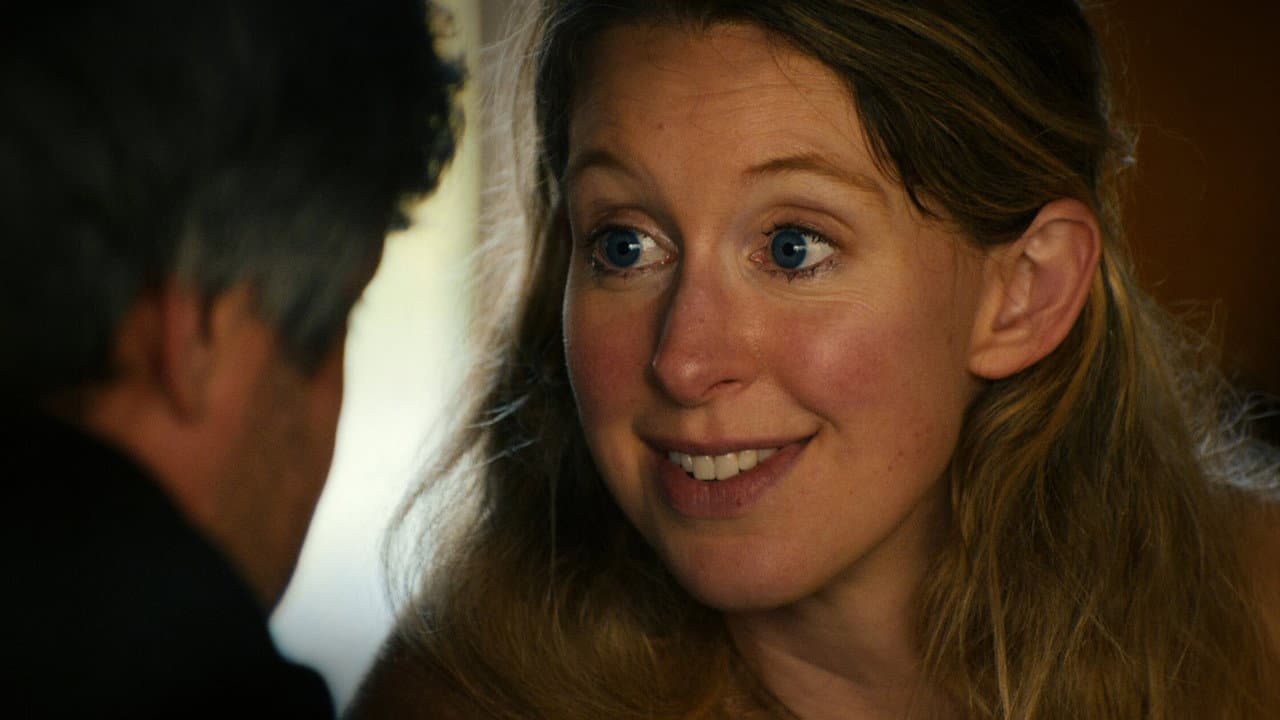
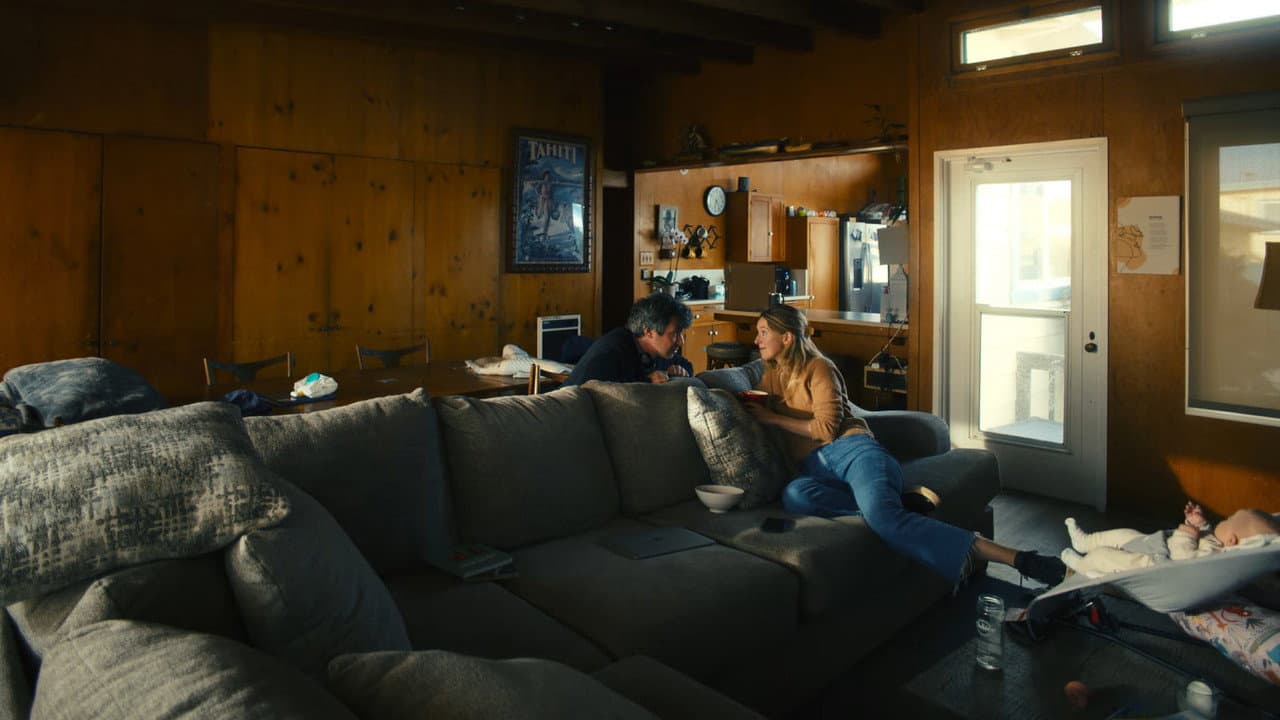
At 174 minutes, the film tests patience. The middle hour sags under the weight of its own self-interrogation, and there are stretches where Fielder seems more interested in his own discomfort than in his subject. Yet the longueurs are also the point. This is a movie about waiting: for sentencing, for absolution, for a reveal that never comes. The final act, set largely in domestic spaces, achieves a genuinely haunting intimacy. A scene of Holmes reading to her children, framed like a home movie, is either the most honest moment in the film or the most calculated. The movie refuses to tell you which.
It also refuses the cheap satisfaction of a takedown. Holmes is not exonerated here, and the film never pretends otherwise, but it is more interested in the machinery of self-forgiveness than in re-litigating the fraud. That restraint will frustrate viewers who came for a scalp. It will captivate those willing to sit inside the ambiguity.
Technically, the film is elegant without being showy. The camera lingers a beat too long on faces, a Fielder signature repurposed for unease. The score, sparse and almost apologetic, keeps the tone from tipping into parody. What emerges is less a portrait of Holmes than a portrait of the desire to be seen-and the cost of getting exactly that.
Pros & Cons
Pros
- Holmes is a mesmerizing, unknowable presence; the camera cannot solve her, and knows it.
- Fielder's formal ambition pays off in the final hour, which is genuinely haunting.
- Seyfried's doubling role is a bold, effective conceptual device.
- Refuses the easy takedown in favor of something more uncomfortable.
Cons
- 174 minutes is a punishing runtime for material this recursive.
- The midsection loses momentum in self-interrogation.
- Some cameo appearances (Oppenheim, Abbott) feel underdeveloped.
- Viewers seeking catharsis or accountability will leave unsatisfied.
Rating Breakdown
Direction9.0/10
Story & Structure6.0/10
Performances8.0/10
Pacing5.0/10
Originality9.0/10
Emotional Impact8.0/10
Final Verdict
You Can See Everything is not a comfortable watch, and it is not meant to be. It is a document of mutual seduction-filmmaker and subject each believing they are in control-and its refusal to resolve that tension is precisely what makes it endure. Trimmed by forty minutes, it might have been a masterpiece. As it stands, it is a fascinating, flawed, unmissable provocation.
🎬Advertisement[movie-in-content]
Cast
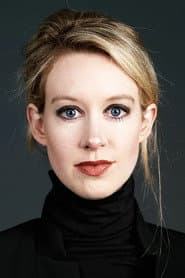
Elizabeth Holmes
Self

Nathan Fielder
Self

Billy Evans
Self

Amanda Seyfried
Self / Elizabeth Holmes

Christopher Abbott
Self
W
William Holmes Evans
Self
I
Invicta Holmes Evans
Self

Lance Oppenheim
Self
Gallery


Similar Movies




#Review#Movies#Entertainment#2026
Related Reviews



🎬Advertisement[movie-bottom-mobile]
Advertisement
160×600
Right Ad