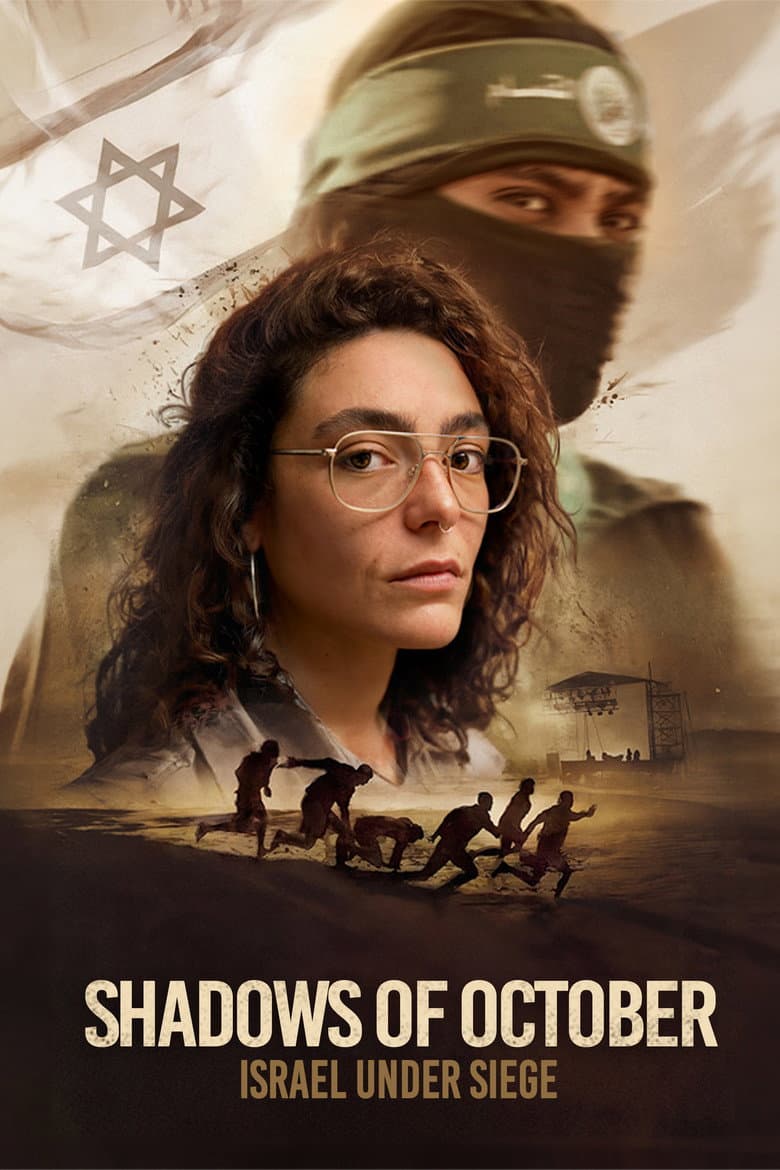
Some dates don’t just mark a moment in time; they carve themselves into the collective consciousness, becoming a before-and-after for an entire nation. August 21, 2026, is one of those dates, as the documentary Shadows of October: Israel Under Siege finally arrives, offering a sobering, deeply human examination of the October 7, 2023, attacks. This isn’t a headline recap or a newsreel. It’s a 113-minute attempt to process the unprocessable, asking questions that linger long after the screen goes dark. Where was God? Why is the world’s oldest hatred surging again? And how does a people begin to heal while the wounds are still open?
Release Date & Where to Watch
Starting today, August 21, 2026, Shadows of October is streaming exclusively on OTT Stories. You can catch it on the platform’s standard subscription tier, available on smart TVs, mobile devices, and web browsers. It is a timed release, designed for a global audience, with subtitles available in twelve languages. Given the subject matter, there is also a curated "Discussion Mode" on the platform, which pauses the film at key moments to offer helpful context for those watching in community or educational settings. For those who prefer the big screen, a limited theatrical run is happening in select major cities, but the primary home for this powerful documentary is right there in your living room, on demand.
Cast & Crew
The film is directed by Beau Lee, a filmmaker whose previous work has often gravitated toward the intersection of faith and geopolitical conflict. Lee’s approach here is observational and restrained, letting the material breathe. He doesn’t rely on flashy graphics or melodramatic scoring. Instead, he builds a mosaic through interviews.
The roster of voices is impressive, including Noam Ben David and Shalev Biton, both survivors who recount their harrowing experiences with a raw, unflinching clarity. We also hear from Doron J Keidar, who provides a tactical ground-level view, and Raz Tahan, whose testimony adds a visceral layer of immediacy. The film also brings in the analytical heft of Itamar Marcus and Saleem Shalash, who offer perspectives on the wider societal and regional fallout. Adding a unique narrative thread is presenter Levi Hazen, who guides the documentary’s spiritual questions. Anna Beth rounds out the principal on-screen participants, contributing to a chorus of voices that represent different facets of Israeli society - secular, religious, young, and old. There are no actors here, no scripted moments. The power on screen is entirely authentic.
Story & What to Expect
This isn’t a film that simply recounts the timeline of October 7. That history is the foundation, but the building is far more complex. The documentary opens with the shock of that morning - the sirens, the chaos, the unimaginable reports - but quickly pivots. It plunges into the unanswerable questions that followed. The central spine of the narrative is the search for meaning in the midst of profound darkness. Through Levi Hazen’s inquiries, the film tackles the theological crisis head-on: where was divine providence during such brutality? It’s a conversation that has been had in hushed tones in synagogues and living rooms across Israel, and here it is laid bare, with survivors and clergy grappling with the silence of heaven.
Simultaneously, the film widens its lens to investigate the global uptick in antisemitism. It connects the dots between the events in the Gaza border communities and the protests, rhetoric, and attacks that have erupted in cities from New York to Paris to London. Expert analysis from Marcus and Shalash helps contextualize this disturbing trend, tracing its roots and examining its current, volatile manifestation. It’s not a comfortable watch; it challenges the viewer to consider uncomfortable truths about propaganda, social media echo chambers, and historical amnesia.
What to expect is a cinematic experience that is equal parts memorial and inquiry. Lee’s direction ensures the pacing is deliberate, allowing the emotional weight of the testimonies to accumulate. The runtime flies by, despite the heavy subject matter, because the storytelling is so immersive. Expect moments of profound grief, but also, surprisingly, flickers of resilient hope. The second half of the film shifts focus to the future, examining how survivors are rebuilding their lives, how communities are rethinking security, and how a nation is finding a way to move forward without forgetting.
Why It's Worth Watching
In a media landscape saturated with hot takes and 24-hour news cycles, Shadows of October offers something rare: the space to think. It is an essential document for anyone trying to understand the current state of the Middle East and the global Jewish experience. The film doesn't pretend to have all the answers - in fact, its greatest strength is its willingness to sit with the questions. The testimony from survivors like Ben David and Biton is not just journalism; it’s living history, preserved with dignity and care.
For viewers who might not be directly connected to Israel, this film serves as a bridge, offering a granular, human perspective that statistics and news alerts cannot convey. It’s a history lesson, yes, but it's also a philosophical meditation on faith, suffering, and identity. The cinematography is intimate, often just a face in close-up, the weight of memory in their eyes. The film manages to be both a powerful record of a specific tragedy and a universal story about the resilience of the human spirit. It’s a heavy watch, no doubt, but it’s a necessary one. Shadows of October doesn't give you closure; it gives you context, and in today’s world, that is more valuable than ever. Stream it, sit with it, and let the conversation begin.